
Complete Dentures

Complete upper and/or lower dentures are for patients who are missing all of their natural teeth. They are tissue supported, meaning they sit on your gums. They are important in preventing loss of vertical dimension and maintaining the integrity of your facial structures. After an initial complete intra and extra oral exam, the denturist can suggest a treatment plan that best suits your individual needs and preferences as well as a denture cost that is right for you.
Fabrication Process
The first step to fabricating a denture is taking an impression of the mouth. Depending on the type of denture, there may be more than one impression appointment to ensure a precise, quality fit. The impression will capture the anatomy of the mouth, existing working muscle obstruction and the area where the denture will sit.


After the impression process, a stone model will be poured using the impression to create a working base on which the denture will be fabricated. Structural planning can now be executed in this step. The denture will be finished using this model.


Using the stone model, a bite block will be fabricated in order to measure jaw relations in the clinic. A proper natural bite will be recorded in the mouth, along with other aesthetic measurements. Tooth colour and size will be determined by the dimensions of the bite blocks. Once the measurements have been taken, these bite blocks will be used to transfer the models to an articulator.


Once bite blocks have been transferred over to the articulator, the tooth arrangement process can begin. They are individually set up. Custom characteristic set-up can be arranged. The teeth should work in harmony with the movement of the articulator. The articulator is a tool to mimic the natural movement of the jaws.


Once the tooth arrangement process is finished, the wax-up process can begin, thus creating the base that will hold the teeth in place. Anatomy of the gums can also be carved out to create a natural aesthetic look. The wax set-up denture will be sent to the clinic and tried in the patient's mouth. Changes in arrangement are still possible at this stage. This is to confirm the look of the denture, ensure that the denture is functional and meets the patient's expectations before being finalized.


After the try-in stage, the models and wax denture are unmounted from the articulator and put in a flask. Once they have been flasked, the wax denture will then be boiled out and the wax will finally be replaced with denture base acrylic.
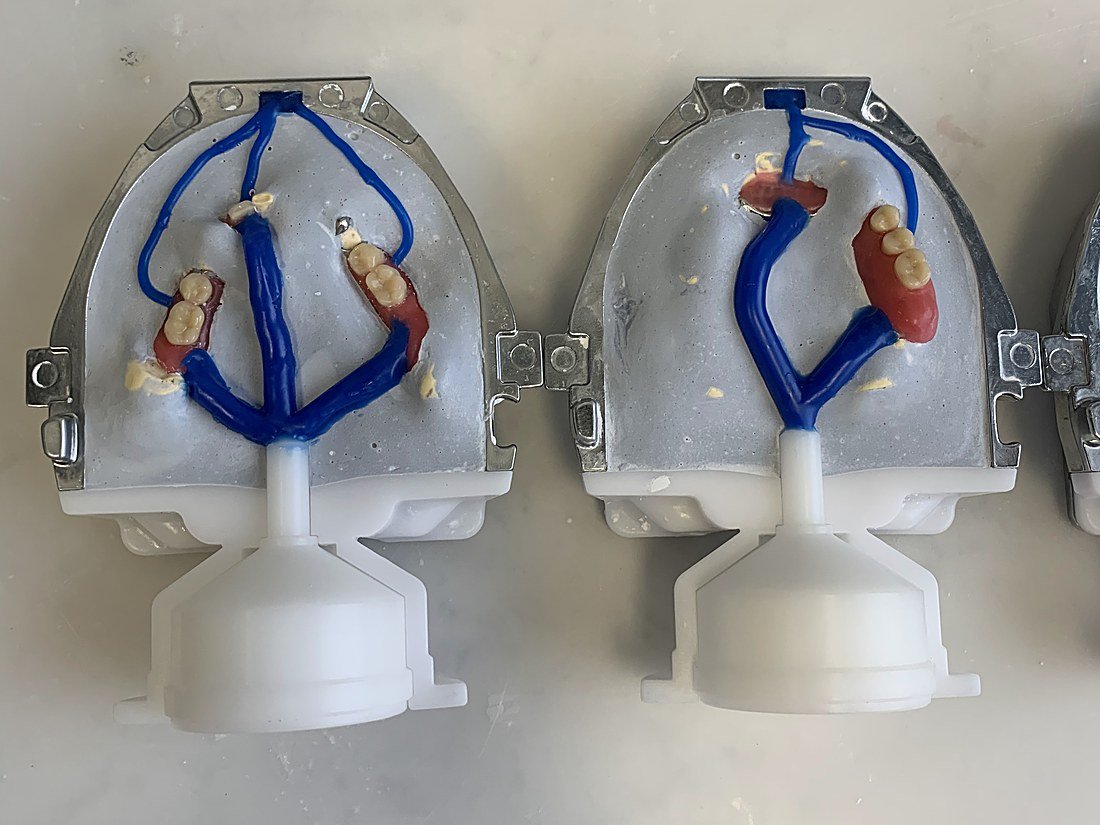

After the cooking stage, the dentures are then unflasked, trimmed and polished into the final product. The appliance is now ready to be inserted into the patient and is ready to take home. However, follow ups and adjustments may be necessary after the insertion appointment. Remember, having a new denture is like riding a new bike. It will take some time for the patient to get used to it.


For individuals who have lost all of their teeth, complete dentures are made to replace and rebuild what has been lost. Without any teeth, an individual has no facial support which can affect speech and cause facial muscles to sag, giving the patient an older look. Also, they are unable to eat, which compromises their diet and the ability to stay healthy.